Standing in the BBQ aisle staring at a wall of options can be daunting. Lump, briquettes, Binchotan-each bag makes a promise, but the wrong choice can lead to a battle with temperature control, unwanted chemical aftertastes, and a disappointing meal. The truth is, the fuel you choose is the foundation of great flavour. Selecting the right charcoal isn’t just a detail; it’s the difference between a good feed and a legendary one.
The satisfaction of mastering a craft applies to many hobbies, from perfecting your BBQ technique to honing your skills on the court. Just as the right fuel is foundational to grilling, having the proper Tennis Equipment is essential for any player looking to improve their game.
This is your definitive guide to mastering the heart of the barbecue. Forget the guesswork. We’re breaking down everything you need to know to move from novice to knowledgeable. You will learn the distinct advantages of each charcoal type, discover which is best for a searing steak versus a slow-smoked brisket, and understand how to light and manage your fire for consistent, high-performance results. It’s time to fuel your grill with confidence and unlock that authentic, smoke-kissed flavour you’ve been chasing.
What Is BBQ Charcoal? The Foundation of Flavour
First, let’s be clear: the fuel you use for your BBQ is not the same as mineral coal. Premium BBQ charcoal is a natural product, crafted specifically for cooking. It is essentially pure carbon made by super-heating natural wood in a controlled environment. This is the secret ingredient that separates authentic, smoky barbecue flavour from the sterile heat of a gas grill, providing the foundation for a truly superior meal.
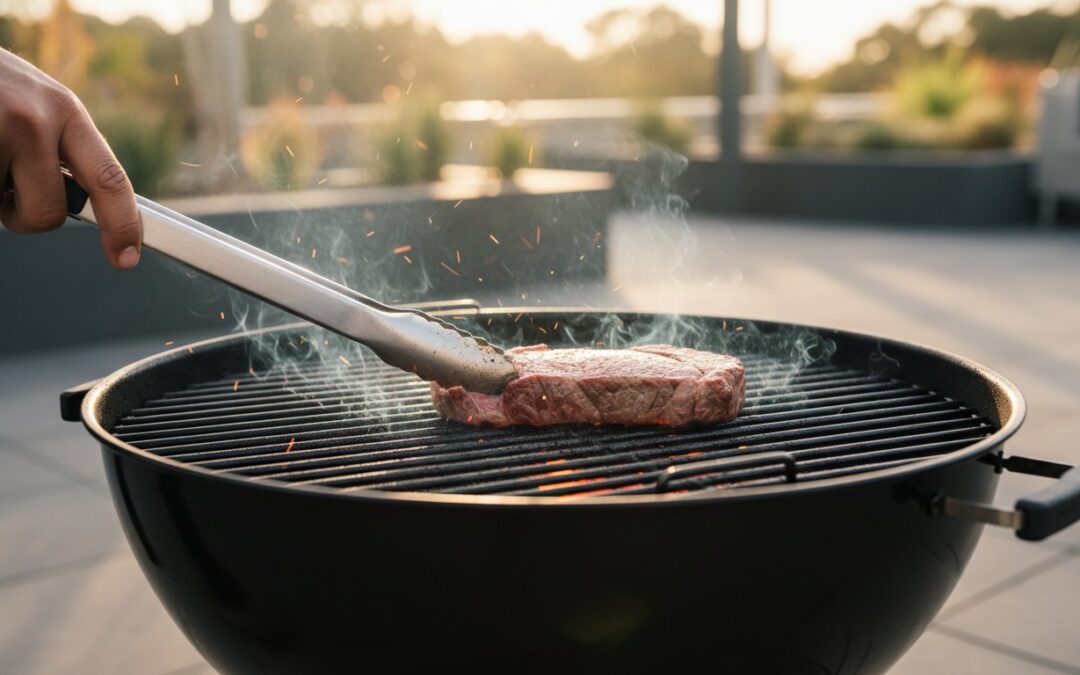
To see how this superior fuel works in practice, this video shows you how to set up a grill for a perfect cook.
How Natural Charcoal is Made
Quality charcoal is produced through a process called pyrolysis. This involves heating wood to extremely high temperatures in a low-oxygen environment, like a traditional kiln or a modern industrial retort. This controlled process burns off water, sap, and other volatile compounds without combusting the wood itself. The science behind what is charcoal is about purification: removing everything but the carbon. The result is a lightweight, porous, and high-carbon fuel source that delivers intense, steady heat.
Why ‘Natural’ and ‘Hardwood’ Matter
Not all wood is created equal. The best fuel comes from hardwoods-dense timbers like Australian Mallee and Gidgee. Unlike softwoods, hardwoods burn hotter, longer, and far more consistently, giving you superior control over your cook. They provide the reliable performance needed for everything from a quick sear to a low-and-slow smoke.
Crucially, ‘natural’ means no chemical additives, binders, or fillers. Many mass-produced briquettes contain substances to help them bind and burn, which can impart an undesirable chemical taste to your food. Pure, natural hardwood lump charcoal produces a clean smoke, ensuring the only flavour you add is authentic, wood-fired goodness.
The Great Debate: Lump Charcoal vs. Briquettes
Step into the world of barbecue, and you’ll immediately face the first critical choice: lump charcoal or briquettes. This is the foundational debate for grillers everywhere. There is no single right answer-the best fuel depends entirely on what you’re cooking and the results you demand. Understanding the core differences is the first step to mastering your fire.
All About Lump Charcoal
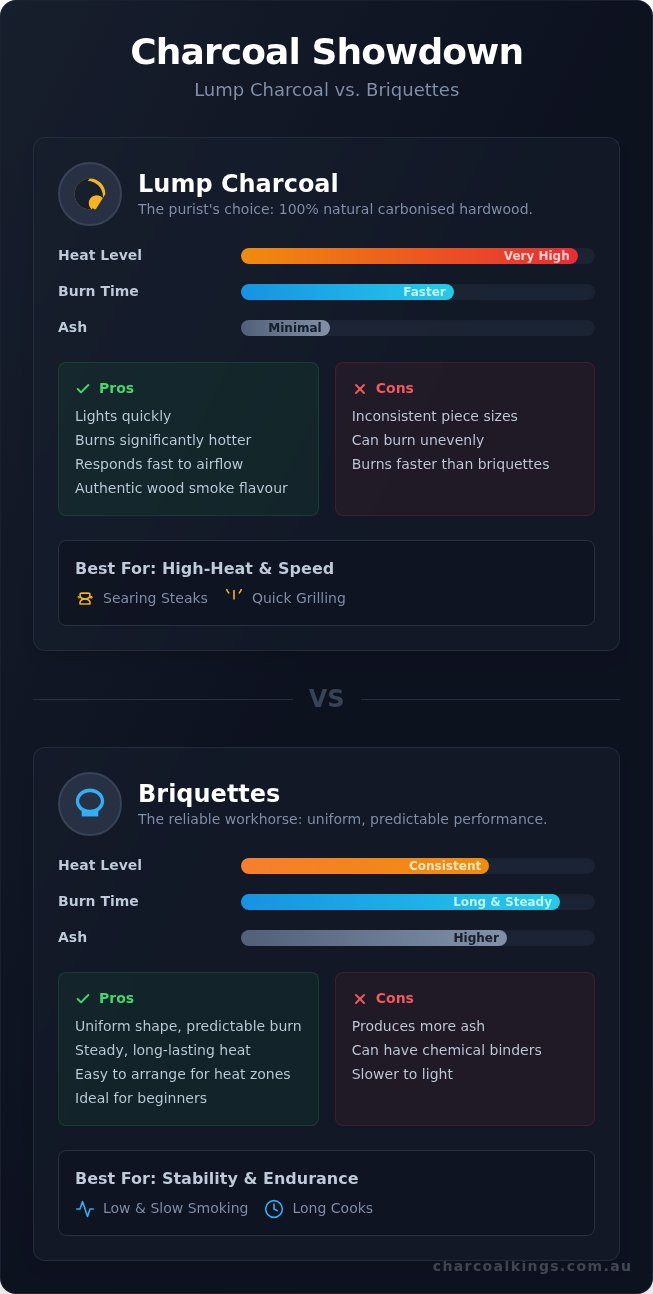
Lump charcoal is the purist’s choice. It is 100% natural hardwood that has been carbonised in a low-oxygen kiln, leaving behind pure carbon in the organic shape of the original wood. This natural process means no fillers, binders, or additives. The type of wood used directly impacts performance, which is why an expert investigates lump charcoal to trace its origins and quality. Its raw form is both its greatest strength and its main challenge.
- Pros: Lights quickly, burns significantly hotter, and responds fast to airflow adjustments for precise temperature control. It imparts a subtle, authentic wood smoke flavour.
- Cons: Inconsistent piece sizes can lead to an uneven burn. It generally burns faster than briquettes, requiring more attention on long cooks.
Best for: High-heat searing on steaks, quick grilling of burgers and snags, and any cook where you want authentic, natural wood flavour.
Understanding Charcoal Briquettes
Charcoal briquettes are the reliable workhorse of the backyard barbecue. They are manufactured by compressing charcoal fines, sawdust, and a natural starch binder into their uniform, pillow-like shape. This consistency is their defining advantage, delivering predictable performance every time.
- Pros: Their uniform shape ensures a predictable, steady, and long-lasting burn. They are easy to arrange for specific heat zones and maintain a consistent temperature, making them ideal for beginners.
- Cons: They produce more ash than lump, which can clog vents on some cookers. Low-quality brands may use chemical binders that impart an off-flavour if not fully lit.
Best for: Long, low-and-slow cooking like smoking briskets or pork shoulders, and any situation where stable, long-term temperature is the top priority.
Quick Comparison: Lump vs. Briquettes
For a fast, at-a-glance summary, here is a direct comparison of the key performance characteristics.
| Feature | Lump Charcoal | Briquettes |
|---|---|---|
| Heat Level | Very High | Medium-High, Consistent |
| Burn Time | Faster | Longer, Steadier |
| Ash Production | Minimal | Higher |
| Flavour | Natural Wood Smoke | Neutral |
| Best For | Searing, Grilling | Smoking, Roasting, Long Cooks |
Ultimately, the best choice is the one that fits your cook. Many serious pitmasters keep both on hand. For a deeper dive into the unique properties of each fuel, explore our dedicated guides on mastering lump and getting the most from your briquettes.
Specialty Fuels: When to Use Binchotan and Other Charcoals
Once you have mastered standard lump and briquettes, the next frontier in heat control and flavour lies in specialty fuels. These premium options are not for your everyday snag sizzle; they are for the enthusiast serious about precision and performance. Using the right specialty charcoal can elevate a great meal into an unforgettable one.
Binchotan: The Japanese White Charcoal
Often regarded as the finest grilling fuel in the world, Binchotan is a traditional Japanese white charcoal forged from Ubame oak. The wood is carbonised at extremely high temperatures for days, resulting in a product that is incredibly dense, pure, and metallic in structure.
Its performance is legendary. While notoriously difficult to light, the reward is an unparalleled cooking experience. Its key benefits include:
- Extremely Long Burn: A single batch can burn cleanly and consistently for three to five hours.
- Clean, Intense Heat: It produces a steady, high heat with virtually no smoke or flare-ups, cooking food with infrared radiation.
- Pure Flavour: The absence of smoke and impurities ensures the natural flavour of premium ingredients is enhanced, not masked.
Binchotan is the ultimate fuel for Japanese yakitori, tabletop konro grills, and professional kitchens where precision is paramount.
Exploring Other Charcoal Varieties
Beyond Binchotan, other niche fuels offer unique characteristics for specific applications. Experimenting with these is a core part of mastering the craft of barbecue.
- Coconut Shell Briquettes: A sustainable powerhouse. Made from compressed, carbonised coconut shells, these are an eco-friendly choice known for a long, even burn and very low ash. They are excellent for long cooks where stable temperature is critical.
- Mangrove Charcoal: A dense hardwood charcoal popular across Asia and widely available in Australia. It lights faster than Binchotan but still offers a solid burn time and high heat, imparting a mild, distinct smoky flavour perfect for seafood and poultry.
Each fuel offers a different aroma, heat profile, and burn time. Choosing the right one for the job is the mark of a true pitmaster.
How to Choose the Right Charcoal for Your Cook
Understanding different fuels is one thing; knowing which to use for your cook is another. This is where theory meets the fire. The type of charcoal you choose dictates heat intensity, burn duration, and the final flavour profile of your food. To achieve consistent, professional-grade results, you must match the fuel to the task. Here, we provide clear, actionable recommendations for the most common BBQ methods.
For Hot & Fast Grilling (Steaks, Burgers, Chops)
When the goal is a hard sear and a perfect crust, premium lump is the only answer. It ignites faster and burns significantly hotter than briquettes, delivering the intense, radiant heat needed for grilling steaks, burgers, and chops.
- High Searing Temperatures: Lump provides the extreme heat required to create the Maillard reaction, locking in juices and flavour.
- Fast Response Time: Its natural structure allows it to react instantly to airflow adjustments, giving you precise control over your fire for a perfect finish every time.
This raw power is engineered for quick, aggressive cooks.
For Low & Slow Smoking (Brisket, Ribs, Pulled Pork)
Low and slow cooking demands stability and endurance. For marathon sessions with brisket, ribs, or pulled pork, high-quality briquettes offer unparalleled consistency. Their uniform, compressed shape guarantees a predictable, steady, and long-lasting burn. This makes them ideal for set-and-forget techniques like the snake method, where stable temperatures are required for many hours. While premium lump can also be used effectively, it requires more hands-on management of your smoker’s vents to maintain that low, consistent heat.
For Everyday All-Round Use
For the pitmaster who needs a versatile, do-it-all fuel, a quality hardwood lump charcoal is the superior choice. It combines the best of both worlds: the raw searing power for a weeknight steak and the control needed for a weekend roast. With practice, managing airflow allows you to dial in temperatures for nearly any cook. More importantly, 100% natural hardwood lump imparts a clean, authentic wood-smoke flavour, free from the binders and additives found in lesser fuels.
Mastering your fire starts with premium fuel. For a product that delivers unmatched performance across any cooking style, our natural hardwood is the professional’s choice. Explore our range of premium hardwood lump charcoal.
Mastering the Fire: Lighting and Temperature Control Basics
You’ve chosen the best fuel, now it’s time to master the flame. For many, the two biggest hurdles are getting the fire started and managing the heat. Forget the guesswork. These are straightforward skills, and with the right technique, you’ll have complete control over your cook. This is where the real craft of barbecue begins.
The Best Ways to Light Your Charcoal
For a fast, clean, and reliable start, nothing beats a charcoal chimney starter. It’s the single best investment for any barbecue enthusiast. Simply stuff a couple of pieces of newspaper or a natural firelighter in the bottom, fill the top with charcoal, and light the paper. In 15-20 minutes, you’ll have perfectly lit, white-hot coals ready to pour into your grill. The best part? No chemical taste. Ever.
We strongly advise against using liquid lighter fluid. It imparts a harsh, chemical flavour to your food, defeating the purpose of using premium, natural fuel. If a chimney isn’t an option, use natural wood wool firelighters or an electric starter for a clean burn from the beginning.
Controlling Your Temperature Like a Pro
Temperature control on a kettle grill is simple: more air equals more heat. Your grill’s vents are your dials. Understanding them is the key to holding a steady temperature for hours.
- Bottom (Intake) Vent: This is your primary temperature control. It feeds oxygen to the fire from below. Open it wider for a hotter fire, and close it down to lower the temperature.
- Top (Exhaust) Vent: This vent pulls air through the grill and lets out heat and smoke. Keep it at least halfway open whenever you’re cooking to ensure proper airflow.
For ultimate versatility, set up a two-zone fire. Bank all your hot coals to one side of the grill. This creates a direct heat zone for searing steaks and an indirect heat zone for roasting chicken or ribs without burning them. It’s a professional technique that’s simple to master and will instantly elevate your results. With these fundamentals and a bag of quality charcoal, you have everything you need to cook like a king.
The Final Word on Fuelling Your Fire
Mastering the art of barbecue begins long before the food hits the grill. It starts with your fuel. As we’ve covered, understanding the distinct advantages of lump versus briquettes and knowing how to control your temperature are fundamental to achieving incredible flavour. The single most important decision is choosing a high-quality charcoal that burns clean, hot, and consistently, laying the perfect foundation for your cook.
At Charcoal Kings, we deliver the performance that pitmasters demand. Our fuel is 100% natural hardwood, with no chemicals or additives, ever. It’s the reason why top restaurants and competition pitmasters across Australia trust our products to deliver unbeatable results. We provide the premium fuel, you provide the passion.
Ready to elevate your barbecue game? Find the perfect fuel for your next BBQ. Shop our premium charcoal now! It’s time to master the flame. Get Sizzlin’!
Frequently Asked Questions About BBQ Charcoal
What’s the difference between BBQ charcoal and the coal used for power?
BBQ charcoal is natural hardwood that has been carbonised in a low-oxygen environment, making it pure carbon designed for clean cooking. Coal for power generation is a fossil fuel mined from the earth. It contains impurities like sulphur and other contaminants that are toxic when burned. Never use fossil fuel coal for cooking; it is dangerous and will ruin your food.
How do I store charcoal to keep it dry and effective?
Moisture is the enemy of good charcoal. The paper bag it comes in offers no protection from humidity. For maximum performance, store your charcoal in a sealed, waterproof container like a heavy-duty plastic tub with a secure lid. Keep it in a dry location such as a garage or shed. This ensures your fuel stays dry, lights easily, and burns consistently every time you fire up the grill.
Can I reuse charcoal that hasn’t fully burned out?
Yes. Reusing charcoal is an efficient way to reduce waste. After you finish cooking, close all the vents on your grill to cut off the oxygen supply, which will extinguish the coals. Before your next cook, simply knock the ash off the leftover pieces, top them up with fresh charcoal, and light as usual. This method is both economical and effective for getting your grill started quickly.
How much charcoal should I use for my grill?
The amount depends entirely on your grill size and what you’re cooking. As a general rule for a standard 57cm kettle grill, one full chimney starter is sufficient for high-heat searing. For low-and-slow cooking or smoking, you’ll need a different setup, like the snake method, to achieve a long, stable burn. Always start with a measured amount and add more only if necessary.
Is natural charcoal better for the environment?
Natural lump charcoal is the superior environmental choice. It is a renewable resource, typically made from sustainably sourced hardwood offcuts. Critically, it contains no chemical binders, fillers, or petroleum-based accelerants found in many cheap briquettes. This results in a cleaner, purer burn that is better for you and the atmosphere, delivering authentic wood-fired flavour without unwanted additives.
Why is premium charcoal more expensive and is it worth it?
Premium charcoal commands a higher price due to the quality of the raw materials and the rigorous production process. It’s made from denser hardwoods, which burn hotter, longer, and produce significantly less ash. While the initial cost per bag, often A$40 or more, is higher than standard briquettes, its superior efficiency means you use less fuel per cook. For grillers who demand performance and flavour, it is a worthwhile investment.